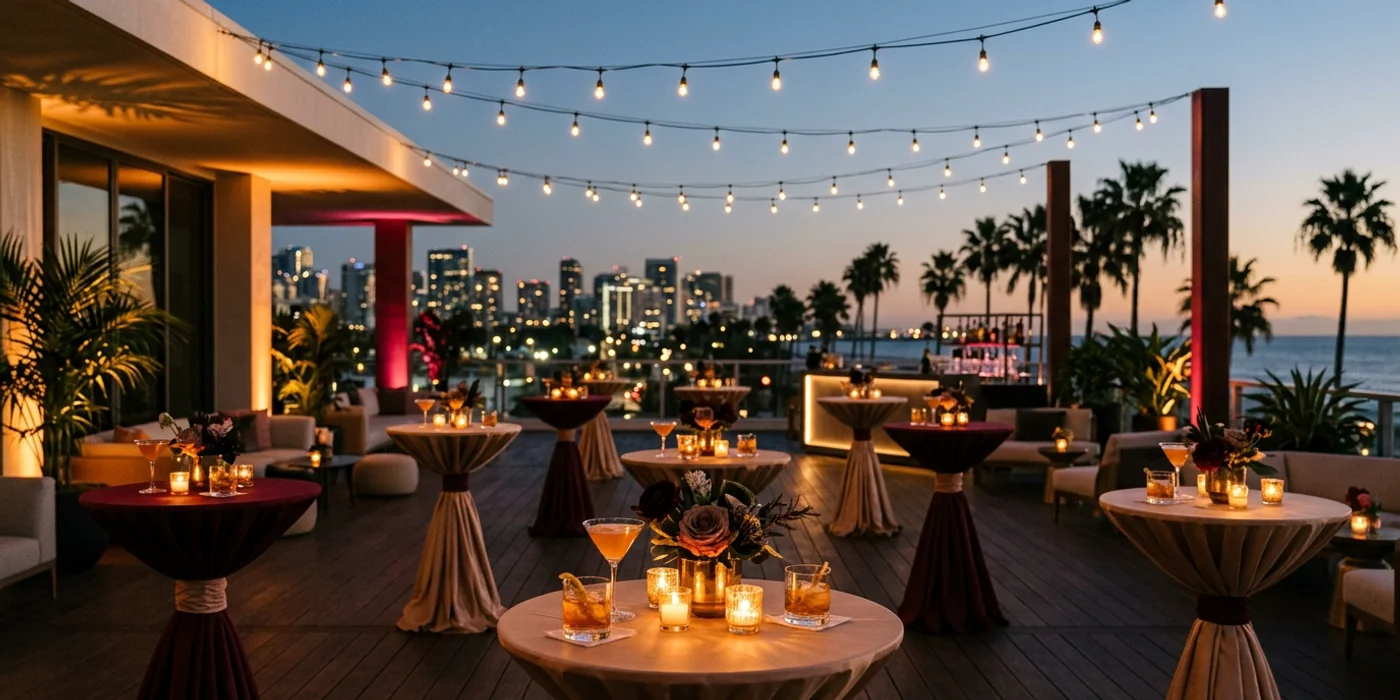
A successful corporate event is not measured at the buffet: it is measured the following Monday, in the corridors — by the conversations it started, the bonds it created, the pride it left behind. Whether you are planning the year-end party, a team building day or a product launch, here is the five-phase method, the traps that return every year, and the figures to frame it all.
Before the checklist: the objective
The question that precedes all others: why this event ? Bonding the teams after an intense year, thanking, celebrating a milestone, charming clients, marking a launch? The objective dictates everything — the format (dynamic cocktail or seated dinner), the venue, the tone of the speeches, even the playlist. An event without a clear objective is an expense; with one, it is an investment.
Phase 1 — set the frame (8 to 12 weeks ahead)
Validate the objective-budget-date trio in a small committee. For the date: a Thursday or Friday maximises attendance, and check the calendar of public holidays and major internal deadlines. Then book the venue — a hotel for simplicity, an estate to leave a mark, a rooftop or villa for originality; our venue comparison will help you decide. The good addresses fill up weeks ahead at year-end.
Phase 2 — build the experience (6 to 8 weeks)
The caterer first: a standing cocktail to keep people moving and networking, a seated dinner for speeches and award ceremonies — and in all cases, collect dietary requirements from the invitation onwards (vegetarian, halal, allergies): a mark of respect that gets noticed. Then the entertainment: a DJ who can read a corporate room, a quiz or an in-house trophy ceremony, a team-building activity in the afternoon if the format allows. Send the internal save-the-date now.
Phase 3 — tech and logistics (4 weeks)
The most underestimated item: sound system and wireless microphone for the speeches, ambient lighting, a projector for a retrospective or presentation, a photobooth corner in company colours. On logistics: shuttles or organised car-sharing if the venue is remote — getting home safely is part of the event.
Phase 4 — lock it down (2 weeks)
Written confirmations from every provider, a minute-by-minute run sheet shared with all (our day schedule tool [link: /en/tools/schedule] works wonders for companies too), a brief for the speakers on the length of their speeches, and a plan B for everything happening outdoors. The payment tracker [link: /en/tools/payments] keeps deposits and balances in sight while you handle the rest.
Phase 5 — the day itself
One designated conductor, reachable, who is not the CEO. A polished welcome (cloakroom, a drink on arrival, music already playing — nobody likes walking into a silent room), speeches early and short, and a photographer or photo corner to capture it all — those images will feed internal communications all year.
The 3 traps that return every year
Speeches that run too long and break the evening's momentum — ten cumulative minutes is a maximum. Neglected sound — a crackling microphone ruins the most moving award. And forgotten dietary requirements — the colleague who cannot eat anything will remember it longer than everyone else remembers the buffet. Three traps, three checklist lines.
The budget, order of magnitude
As a guide: standing cocktail from Rs 600 to Rs 1,200 per person, seated dinner from Rs 1,200 to Rs 2,500, DJ and technical from Rs 15,000 to Rs 40,000 depending on scale, venue hire highly variable — hence the value of comparing the total cost per guest. Our budget calculator adapts perfectly to a corporate event.
Delegate to the right professionals
Caterers used to corporate formats, DJs, technicians, photographers, venues: they are on Moris Events , with verified reviews. Describe your event in our brief — date, headcount, desired mood — and receive replies from matching providers, free of charge. Your team deserves an evening worthy of them; your organisation deserves peace of mind.